Quick Enquiry

Product Details

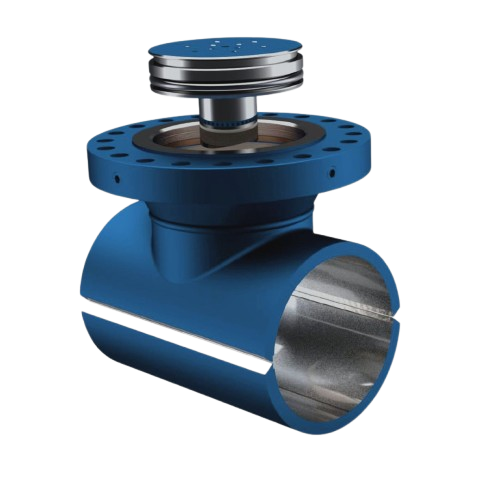
At Pipeontec, our advanced line stop fittings are engineered for live pipeline intervention allowing you to isolate sections of a pressurized pipeline without shutting down the entire system. Whether it’s emergency maintenance, scheduled repairs, or pipeline expansion, our fittings are a trusted choice across oil, gas, and water industries.

We deliver both the technology and the technical expertise to help you maintain operations while safely isolating the segment that needs attention.

Product Specification

Key Features

  • Material coded for identification and traceability

  • Delivered with full material certification

  • Compatible with a wide range of testing protocols, including:

    • Radiographic Testing

    • Ultrasonic Testing

    • Magnetic Particle Examination

    • Hydrostatic Testing

    • Destructive & Non-Destructive Testing

  • Custom-manufactured to your quality control standards

Technical Specifications

  • Outlet sizes from 2” to 48”

  • Equipped with RF welding neck flanges per ANSI Class 150, 300, 600, or 900

  • Custom pressure ratings and dimensions available on request

Applications

  • Crude and refined oil pipelines

  • High and low-pressure gas pipelines

  • Municipal and industrial water systems

What Is Line Stopping?

Line stopping, also known as line plugging, is the method of temporarily isolating a section of a pipeline while keeping the rest of the system operational. This technique is especially useful when nearby valves aren’t functioning or don’t exist.

At Pipeline, our fittings and expertise make it possible to modify, repair, or reroute pipelines without draining, depressurizing, or disrupting service.

How the Line Stop Process Works

  1. Site Assessment & Planning
    Our engineers begin by assessing pipe material, line pressure, and diameter. We develop a tailored plan for the intervention with full safety and operational continuity in mind.

  2. Installation of Line Stop Fittings
    A flanged line stop fitting is welded or clamped (for non-weldable pipes). A temporary valve is then mounted, and a hot tap is performed—allowing access without pressure loss.

  3. Insertion of Stop Head & Actuator
    The line stop head is introduced through the valve and activated using a mechanical actuator to halt flow within the targeted segment.

  4. Completion Plug & Restoration
    Once the required maintenance or pipeline work is complete, a completion plug seals the fitting. The temporary valve is removed, and a blind flange is bolted into place to restore pipeline integrity.

  5. System Recommissioning
    Our team ensures that the isolated section is reintegrated without leakage or loss. Flow is resumed, and your operations continue uninterrupted.

Reusability & Reliability

One of the major advantages of our fittings is reusability. If future intervention is required at the same location, the installed fitting can be used again—saving both time and costs.

Why Choose Pipeontec for Line Stop Fittings?

  • Proven Experience in pipeline maintenance and live-line intervention

  • Precision Engineering tailored to your pipeline specs

  • Safety-First Approach from planning to execution

  • Full Lifecycle Support from fittings to pressure testing and commissioning

Our line stop solutions are trusted by industries that demand precision, reliability, and zero service disruption. Whether it’s a planned upgrade or a critical emergency, Pipeontec delivers the tools and know-how to get the job done safely and efficiently.


Search Your Products

Call Now Button